
Stitches & Laceration Repair in Livonia
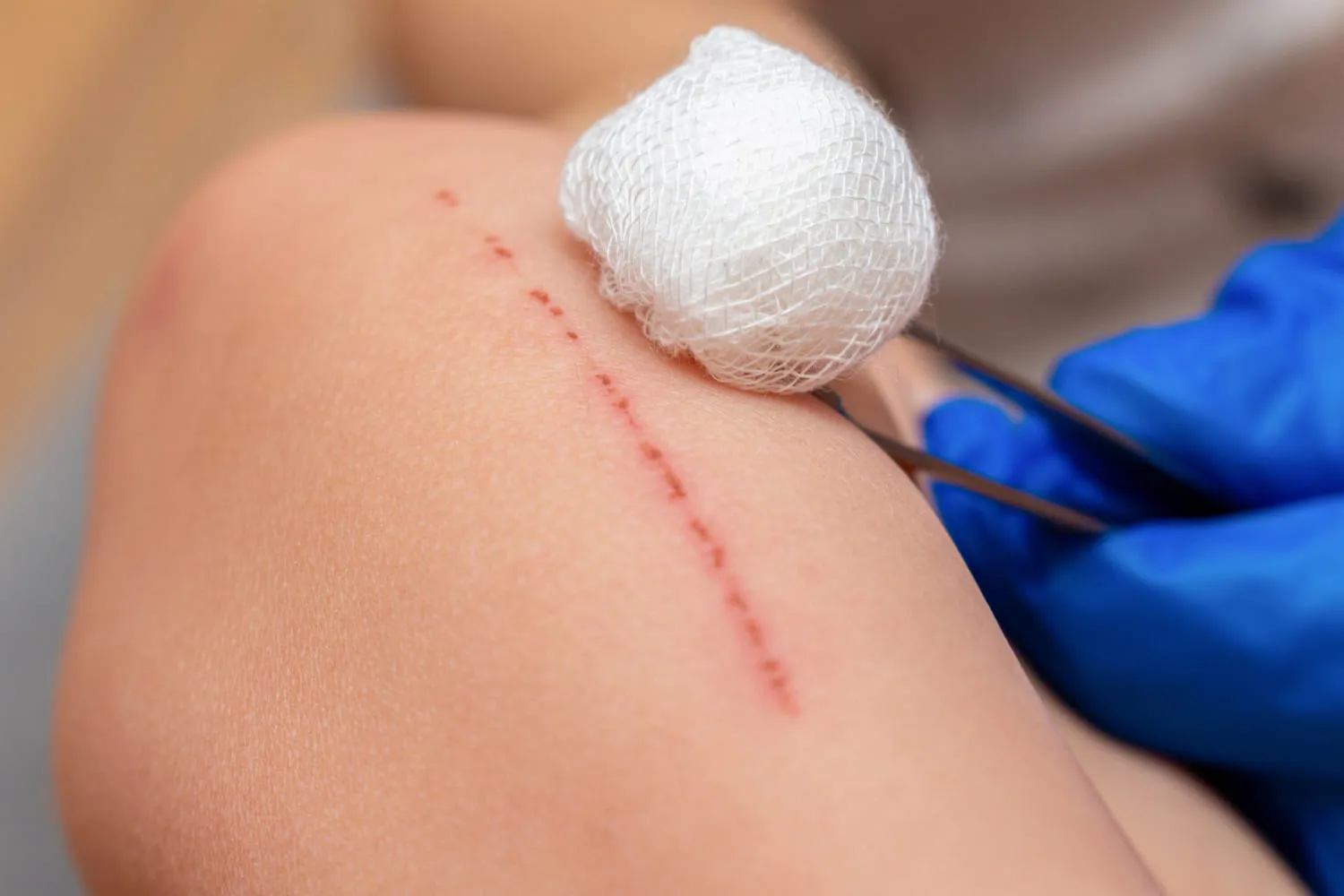
Does my cut need stitches?
Come in if any of these is true:
- The edges gape open or won’t stay together
- It’s deeper than the top layer of skin: you can see fat, muscle, or bone
- Bleeding hasn’t stopped after 10–15 minutes of direct pressure
- It’s on the face, or across a joint where movement keeps reopening it
- It came from something dirty, rusty, or from an animal
When in doubt, get it looked at. A wound that needed closure and didn’t get it heals slower, scars worse, and gets infected more often.
What happens during the repair?
Four steps, all in one visit. The wound is examined to check depth and rule out damage underneath. It’s cleaned and irrigated, the step that actually prevents most infections. The area is numbed with local anesthetic; after that you feel pressure, not pain. Then it’s closed with whatever the wound actually calls for: sutures, skin adhesive, or steri-strips.
You leave with wound-care instructions and, if the injury calls for it, a tetanus booster.
How soon do I need to come in?
Same day, ideally within a few hours. You may have heard a strict “six hour rule”; the evidence behind that specific number is weaker than its reputation, and wounds on the face and scalp are often closed later than that. What actually decides it is the state of the wound rather than the clock: how contaminated it is, where it sits on the body, and how it happened. Closing a badly contaminated wound too late can seal bacteria inside, so earlier is genuinely better, but do not talk yourself out of coming in because you think you have missed a deadline. More on how that decision is made.
Will it scar?
Every laceration scars, the honest variables are how much. Early closure, clean technique, and following the aftercare instructions all shrink the final scar. Cuts on the face get particular attention for exactly this reason.
Do stitches need to come out?
Non-dissolving sutures do, typically after 5–14 days depending on location. Removal happens here too, sutures and staples alike. It’s quick, nearly painless, and needs no appointment, like everything else at the clinic. That includes stitches and staples placed somewhere else, like a hospital ER: come in when they’re due out, and we’ll check the healing while we’re at it.
Questions
Before you come in for stitches & laceration repair
The things people ask most often. There are more on the FAQ page.
Can you stitch a cut?
Yes. Laceration repair is done here, including cleaning the wound, closing it with stitches, skin adhesive, or strips depending on what suits the cut, and a tetanus shot if you are due one. Deep wounds involving tendon, nerve, or artery, and wounds with heavy bleeding, belong in an emergency department.
Should I go to urgent care or the emergency room?
Call 911 or go to an emergency department for chest pain, difficulty breathing, stroke symptoms such as face drooping or sudden weakness on one side, uncontrolled bleeding, major trauma, or anything that feels life-threatening. For everything below that line, urgent care is faster, calmer, and a fraction of the cost. If you arrive here with something that belongs in an emergency department, you will be told plainly and helped to get there.
Do I need an appointment?
No. Serenity is a walk-in clinic: come in, give the front desk your name, and you will be seen. There is no appointment to make and no referral to chase. Two kinds of visit are the exception and do want a booking, because time is set aside for them: IV drips and weight-loss consultations.
What should I bring to my visit?
A photo ID, your insurance card, a list of the medications you take, and any form that needs signing, such as a school, sports, or employer physical form. If a specialist or another clinic has recent results relevant to your visit, bring those too.
What will my visit cost?
With insurance, what you pay is usually a copay set by your plan, and urgent care copays are typically well below an emergency department copay for the same complaint. The exact figure depends on your plan, your deductible, and what the visit involves, so the honest answer is to check your card or call (248) 482-8809 and ask before you come in. Nobody should be surprised by a bill.
From our patients
What people say about the clinic
Reviews left on Google, in our patients' own words, each one linking to the original so you can check it yourself.
Ready when you are