
Does My Cut Need Stitches?
A few signs make the decision straightforward: edges that gape open, a cut deep enough to show tissue underneath, bleeding that will not stop with pressure, or a wound across a joint or on the face. When in doubt, have it looked at the same day.
Published August 24, 2026Written from the sources cited below
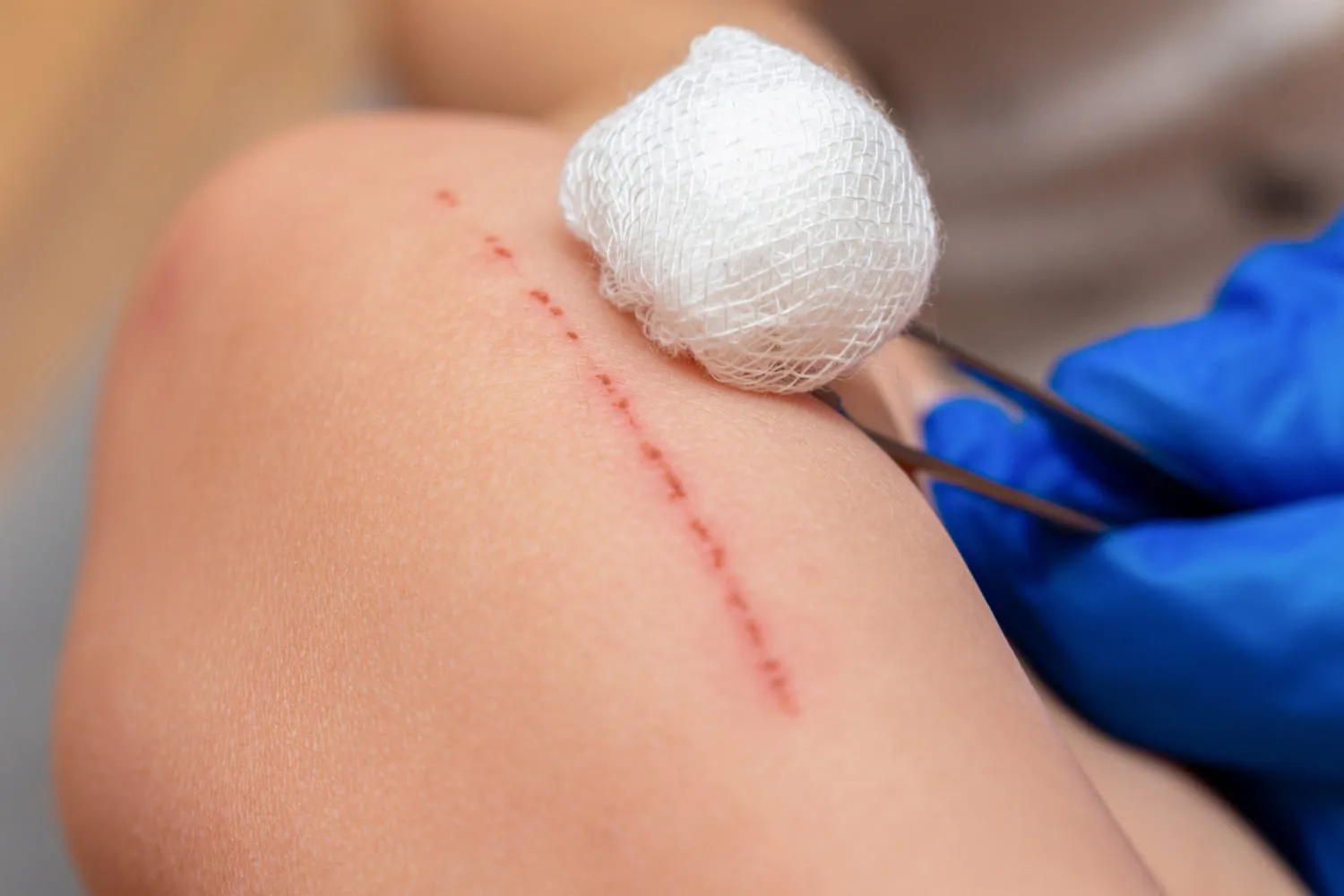
How do I know if a cut needs stitches?
Come in and have it looked at if any of these is true:
- The edges gape open or will not stay together when you release the skin
- It is deeper than the top layer of skin — you can see fat, muscle, or bone
- Bleeding has not stopped after 10 to 15 minutes of firm, direct pressure
- It crosses a joint, where movement keeps pulling it open
- It is on the face, where scarring matters and closure technique makes a difference
- It came from something dirty or rusty, an animal bite, or a puncture
A cut that needed closing and did not get it tends to heal more slowly, scar more visibly, and become infected more often. If you are unsure, an exam costs you a short visit; guessing wrong costs considerably more.
How long do I have to get stitches?
Sooner is better, and the same day is a sensible target. But the widely repeated “six hour rule” deserves a caveat, because the evidence behind it is weaker than its reputation.
That figure traces back to animal experiments from the 1890s, and a systematic review of the question concluded that a strict time cut-off for primary closure of simple traumatic wounds is not well supported by modern evidence. In practice, wounds on the face and scalp, which have a rich blood supply and lower infection rates, are often closed well beyond six hours.
What actually drives the decision is the state of the wound rather than the clock: how contaminated it is, where it is on the body, how it happened, and your own risk factors. A clinician assesses those together. So do not talk yourself out of coming in because you think you have missed a deadline, and do not treat a generous window as a reason to wait.
What happens during a laceration repair?
Four steps, all in one visit:
- Examination. The provider checks how deep the wound goes and whether anything underneath, such as a tendon or nerve, is involved.
- Cleaning and irrigation. This is the step that prevents most infections, and it matters more than the closure method.
- Numbing. Local anesthetic goes in first. After that you feel pressure, not pain.
- Closure. Sutures, skin adhesive, or adhesive strips, chosen to fit the wound rather than by habit.
You leave with wound-care instructions and, if needed, a tetanus booster.
Will I need a tetanus shot?
Possibly, and it depends on how long it has been and what kind of wound it is. The CDC’s wound-management guidance sets out the intervals clearly:
- For clean, minor wounds, a booster is given if it has been 10 years or more since your last tetanus-containing vaccine.
- For dirty or contaminated wounds, a booster is given if it has been 5 years or more.
Adults are advised to have a Td or Tdap booster every 10 years regardless of injury. Most people do not track this, which is why the question comes up at every wound visit. If you cannot remember your last one, that uncertainty is usually answer enough.
Do stitches have to come out?
Dissolving sutures do not. Non-dissolving ones are typically removed after about 5 to 14 days depending on where they are on the body, since areas under tension and areas that move need longer. Removal is quick and nearly painless.
At Serenity, removal is a walk-in visit, including for stitches or staples placed somewhere else, such as a hospital emergency department. Bring the discharge paperwork if you have it.
Will it scar?
Every full-thickness cut leaves some mark. What changes is how much. Prompt closure, thorough irrigation, technique matched to the location, and following the aftercare instructions all reduce the final appearance. Cuts on the face get particular care for exactly this reason.
When is a cut an emergency instead?
Go to an emergency department, or call 911, if:
- Bleeding is heavy, spurting, or will not slow with firm pressure
- The wound is very deep, gaping widely, or you can see bone
- You have lost sensation or cannot move the area normally, which can indicate nerve or tendon injury
- It is a deep puncture to the chest, abdomen, or head
- The wound is from a serious animal or human bite, or is heavily contaminated
For the ordinary kitchen knife slip, the box cutter, the fall on the sidewalk, walk-in care handles it in one visit, without an emergency room bill.
Sources
About this article
This is general health information, not medical advice, and it cannot account for your history or your symptoms. It is not a diagnosis and does not create a patient relationship. For advice about your own health, see a clinician:walk in or call(248) 482-8809.
If you think you are having a medical emergency, call 911. Please do not send personal health information through this website.
Ready when you are