
Sprain or Fracture? How to Tell the Difference
You often cannot tell from the outside, and neither can a clinician with certainty. Both swell, both bruise, and both hurt to stand on. What settles the question is an examination, and where the exam raises doubt, an X-ray.
Published August 24, 2026Written from the sources cited below
What is the actual difference?
A sprain is an injury to a ligament, the tough band of tissue connecting one bone to another. A fracture is a break in the bone itself. A strain, a third possibility that often gets lumped in, is an injury to a muscle or tendon.
The distinction matters because the treatment diverges. A ligament that has been stretched or partially torn generally heals with protection, time, and progressive loading. A broken bone may need immobilisation in a specific position, a particular length of healing time, or in some cases an orthopedic referral. Guessing wrong in either direction costs you.
Why can’t I just tell from the swelling?
Because swelling, bruising, and pain do not reliably separate the two. OrthoInfo, published by the American Academy of Orthopaedic Surgeons, notes that a severe sprain can produce the same dramatic swelling and bruising as a fracture, and that the only way to be sure is an examination and, where indicated, imaging.
Some rough signals that raise suspicion of a fracture:
- You could not put weight on it immediately after the injury, and still cannot
- Tenderness directly over a bone, rather than over the soft tissue beside it
- A deformity, or the limb looking out of its normal shape
- A snap or crack heard at the moment of injury
- Numbness or pins and needles below the injury
None of these is conclusive on its own. Plenty of people walk into a clinic on an ankle that turns out to be fractured, and plenty of dramatic-looking injuries turn out to be sprains.
Do I need an X-ray?
Not always, and a good clinic will not image reflexively. Clinicians use structured decision rules developed for exactly this question, based on where the bone is tender and whether you can bear weight. Those rules exist to identify who genuinely benefits from imaging and to spare everyone else the exposure and the cost.
Professional bodies publish appropriateness criteria on the same principle: imaging should answer a specific question raised by the physical exam.
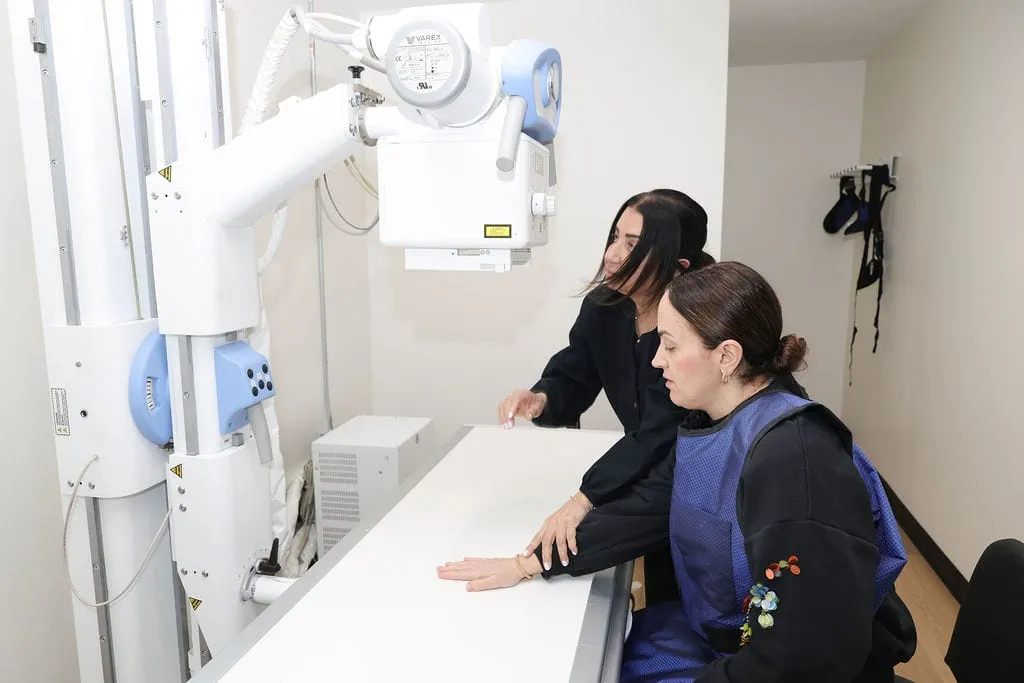
Where an X-ray is warranted, having it in the building matters. Serenity Urgent Care has digital X-ray on site covering the foot, ankle, knee, hip, hand, finger, back, neck, chest, and abdomen, so the exam, the image, and the treatment happen in one visit rather than across three appointments.
What should I do before I am seen?
For the first day or two, standard first aid for a suspected sprain applies, and MedlinePlus sets it out simply:
- Protect and rest the injured part, and stop using it in the way that hurts
- Ice through a cloth, not directly on skin, for roughly 15 to 20 minutes at a time
- Compress gently with an elastic bandage, snug but not tight enough to cause numbness or tingling
- Elevate above the level of your heart where you can
Do not push through it “to see if it loosens up”. Walking on an unrecognised fracture is one of the more common ways a straightforward injury becomes a complicated one.
How is each one treated?
A sprain is generally managed with protection, controlled loading, and time. Depending on severity that might mean a wrap, a brace, or a walking boot, along with guidance on what movement is safe and when to progress.
A fracture depends entirely on which bone and how it broke. Some are managed with immobilisation and follow-up. Others need an orthopedic specialist. Part of a good urgent care visit is being told honestly which category you fall into and being pointed onward promptly when a specialist is needed.
Either way you should leave knowing what the injury is, what the plan is, and what would count as it getting worse.
When should I go to an emergency room instead?
Go to an emergency department, or call 911, if:
- The limb looks deformed or bent out of shape
- Bone is visible or breaking the skin
- The area below the injury is numb, cold, pale, or blue, which can indicate compromised blood supply or nerve injury
- There is heavy bleeding you cannot control
- The injury involves a major fall, a car accident, or significant force, especially to the head, neck, hip, or back
For the ordinary rolled ankle, the jammed finger, the fall on an outstretched hand, a walk-in clinic with on-site imaging will get you diagnosed and treated faster and for considerably less than an emergency department.
How long does healing take?
It varies with the severity and location, and any clinic offering a firm number without examining you is guessing. Mild sprains often settle within a couple of weeks, more severe ligament injuries take considerably longer, and fractures follow their own timeline by bone. What you should get at the visit is a realistic range for your specific injury and a clear sense of when to come back if progress stalls.
Sources
About this article
This is general health information, not medical advice, and it cannot account for your history or your symptoms. It is not a diagnosis and does not create a patient relationship. For advice about your own health, see a clinician:walk in or call(248) 482-8809.
If you think you are having a medical emergency, call 911. Please do not send personal health information through this website.
Ready when you are