
Minor Burns: What to Do and When to Be Seen
Cool running water for about 20 minutes is the single most useful thing you can do for a fresh burn, and it works for far longer after the injury than most people assume. What comes next depends on the burn's depth, size, and location.
Published August 24, 2026Written from the sources cited below
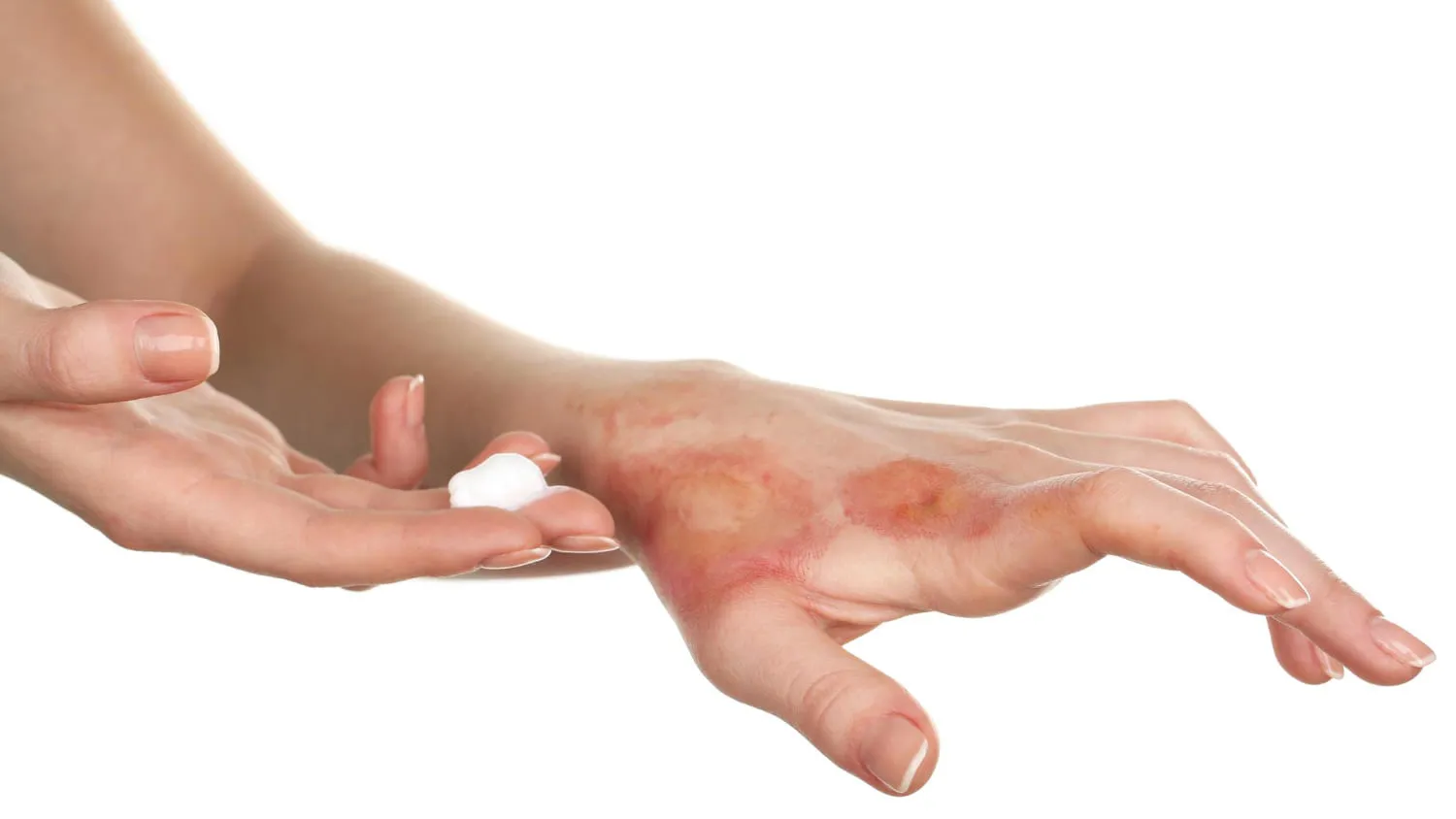
What should I do in the first few minutes?
For a burn from heat, the immediate steps are simple and they matter more than anything that happens later:
- Stop the burning. Move away from the source and remove clothing or jewellery near the area, unless it is stuck to the skin, in which case leave it.
- Cool it with running water. Cool, not cold, for about 20 minutes.
- Cover it loosely with a clean, non-fluffy dressing or cling film once cooled.
- Keep the person warm overall, since cooling a large area can drop body temperature.
The American Academy of Dermatology and MedlinePlus both describe this approach for minor burns.
What should I never put on a burn?
Several pieces of folk wisdom actively cause harm:
- Not ice or iced water. It can worsen tissue damage in the burned area.
- Not butter, oil, toothpaste, or ointment on a fresh burn. These trap heat and complicate cleaning and assessment.
- Do not break blisters. Intact skin is a barrier against infection.
- Do not peel away anything stuck to the burn.
Cool running water is the treatment. Almost everything else people reach for makes the situation worse.
How do I tell how bad a burn is?
Burns are usually described by depth:
- Superficial (first-degree) — red, dry, painful, no blisters. Sunburn is the familiar example. These generally heal on their own within days.
- Partial thickness (second-degree) — blistering, wet-looking, very painful. These often need assessment, and larger ones need proper dressing and follow-up.
- Full thickness (third-degree) — white, leathery, brown, or charred, and sometimes numb rather than painful, because the nerve endings are damaged. These always need emergency care.
A burn that is numb in the middle is not a good sign, however reassuring the absence of pain feels.
Which burns should be examined?
Come in and have it looked at if:
- It is larger than about three inches across
- It is on the face, hands, feet, genitals, or over a joint, where scarring and stiffness affect function
- It blisters significantly, or the blisters break
- It wraps around a limb, finger, or toe
- It was caused by chemicals or electricity, both of which can cause damage deeper than the surface suggests
- The person is very young, elderly, pregnant, diabetic, or immunocompromised
- It shows signs of infection later: spreading redness, increasing pain, pus, or fever
Serenity Urgent Care treats minor burns and provides wound care as walk-in visits, 7 days a week.
Will I need a tetanus shot?
Possibly. Burns break the skin barrier, and the CDC’s wound-management guidance applies: a tetanus booster is given for clean, minor wounds if it has been 10 years or more since your last tetanus-containing vaccine, and for dirty or contaminated wounds if it has been 5 years or more.
Most people cannot remember their last booster, which is why the question comes up at every wound visit. If you are unsure, say so.
What happens at the visit?
The provider assesses depth, size, and location, cleans the burn, and dresses it appropriately. Blisters are managed according to their size and position rather than by a blanket rule. You leave with dressing instructions, guidance on pain relief, a clear description of what infection would look like, and a follow-up plan if the burn needs redressing.
If the burn is deeper or more extensive than a walk-in clinic should manage, you should be told that directly and sent to the right place. The American Burn Association publishes the criteria clinicians use to decide when a burn belongs at a specialised burn centre.
When is a burn an emergency?
Call 911 or go to an emergency department for:
- Burns that are large, deep, or look white, leathery, or charred
- Burns to the airway, or any burn with hoarseness, coughing, singed nasal hair, or difficulty breathing
- Electrical burns, including apparently minor ones, since the visible injury can badly understate the internal damage
- Chemical burns to the eyes or a large area
- Burns with confusion, fainting, or signs of shock
- Any burn on someone who is very young or frail, where the threshold should be lower
For a splash of hot oil, a brush against a hot pan, or a bad sunburn that has blistered, a walk-in visit will handle it without an emergency room bill.
Sources
About this article
This is general health information, not medical advice, and it cannot account for your history or your symptoms. It is not a diagnosis and does not create a patient relationship. For advice about your own health, see a clinician:walk in or call(248) 482-8809.
If you think you are having a medical emergency, call 911. Please do not send personal health information through this website.
Ready when you are