
Does Urgent Care Do X-Rays?
Many urgent care clinics have an X-ray machine on site, and Serenity Urgent Care in Livonia is one of them. Not every clinic does, and no urgent care offers every kind of imaging, so it is worth knowing the difference before you drive over.
Published August 24, 2026Written from the sources cited below
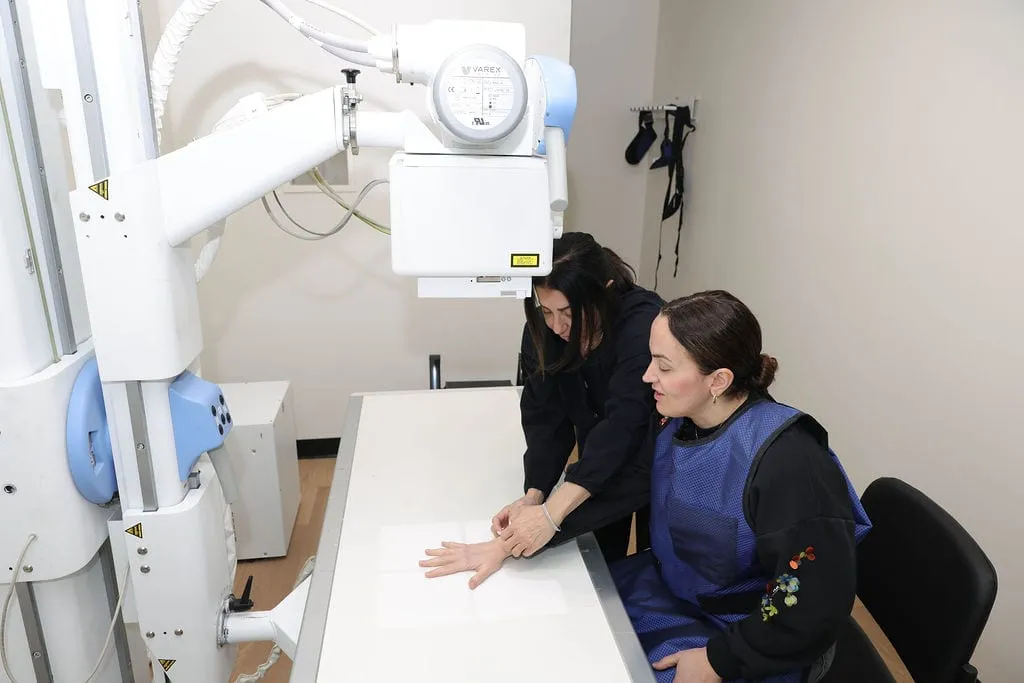
Which urgent cares actually have X-ray?
It varies, and that is the honest answer. Some urgent care clinics have digital radiography in the building; others examine you, suspect a fracture, and send you elsewhere for the image. Because there is no single national standard, the only reliable way to know is to check the clinic’s website or call.
Serenity Urgent Care has digital X-ray on site, available during all opening hours, so the exam, the image, and the treatment happen in one visit.
What body parts can be X-rayed at urgent care?
At Serenity, digital X-ray covers the areas where everyday injuries usually happen:
- Foot and ankle
- Knee and hip
- Hand and finger
- Back and neck
- Chest
- Abdomen
That range covers the great majority of walk-in visits that need imaging: a rolled ankle, a jammed finger, a fall on an outstretched hand, persistent back pain after a lift, or a chest film where a cough or suspected pneumonia calls for one. If your injury falls outside that list, a provider will tell you where to go instead.
What can’t urgent care image?
X-ray is not the same as advanced imaging. Urgent care clinics generally do not have:
- CT scans, used for head injuries, complex fractures, and internal bleeding
- MRI, used for ligaments, discs, and soft tissue
- Ultrasound, used for blood clots, pregnancy, and gallbladder problems
If your exam suggests you need one of those, the right move is a referral or an emergency department, not a longer wait at a walk-in clinic. Being told that plainly is part of a good visit.
Do I need an X-ray for every injury?
No, and a good clinic will not image reflexively. Radiology professional bodies publish appropriateness criteria precisely because imaging should answer a specific question raised by the physical exam, not substitute for it.
Clinicians also use validated decision rules for common injuries. For ankle and foot injuries, for example, structured rules based on where the bone is tender and whether you can bear weight help identify which patients genuinely need an X-ray. The exam comes first; the image confirms or rules out what the exam suspected.
Is a diagnostic X-ray safe?
The radiation dose from a plain X-ray of a limb is very small. The FDA notes that the risk from a medical X-ray is generally low compared with the benefit of an accurate diagnosis, and doses vary by body part, with extremity images among the lowest. RadiologyInfo.org, published by the American College of Radiology and the Radiological Society of North America, publishes typical doses per exam if you want the specific numbers.
Two practical points:
- Tell the provider if you are or might be pregnant. That changes the decision, and alternatives exist.
- Shielding and technique matter, which is why imaging is done by trained staff rather than on demand.
What happens during an X-ray visit?
A provider examines the injury first and decides whether imaging will change what happens next. If it will, the X-ray is taken in the building, usually in a few minutes. The provider reviews the images with you, explains what they show in plain language, and treats accordingly: a splint, a wrap, wound care, or a referral to an orthopedic specialist if the finding calls for one.
The advantage of on-site imaging is not the picture itself. It is that the diagnosis and the treatment happen in the same visit, instead of an exam today, an imaging center tomorrow, and results the day after.
How long does it take to get the result?
Usually minutes rather than days, which is the practical difference between imaging in the building and imaging somewhere else.
With digital radiography the image is available almost immediately after it is taken. The provider reviews it during your visit and discusses it with you, often with the picture on screen in front of you. Treatment follows in the same visit.
Where a finding is complex or unclear, images may be reviewed further by a radiologist, and the clinic will contact you if that review changes anything. Ask before you leave whether that applies to your images and how you will be contacted if so.
If you need a copy of the images for a specialist, an orthopedic referral for example, ask at the desk. Bringing your own images to a specialist appointment can spare you a repeat exam.
Do I need an X-ray referral from my doctor?
Not for a walk-in visit. Imaging at Serenity happens as part of the normal flow: a provider examines you, decides imaging is warranted, and it is done there and then.
This is different from a standalone imaging appointment at a radiology centre, which usually does require an order from a clinician. If your own doctor has already ordered an X-ray and given you a requisition, call ahead and ask whether the clinic can perform that specific study before you drive over.
When should I go to the emergency room instead?
Go to an emergency department, or call 911, for a bone that is visibly deformed or breaking the skin, bleeding you cannot control, a head injury with loss of consciousness or confusion, or any injury that feels life-threatening. Those need resources a walk-in clinic does not have.
For everything below that line, walk-in care with on-site X-ray is usually faster and considerably less expensive than an emergency department for the same image.
Sources
About this article
This is general health information, not medical advice, and it cannot account for your history or your symptoms. It is not a diagnosis and does not create a patient relationship. For advice about your own health, see a clinician:walk in or call(248) 482-8809.
If you think you are having a medical emergency, call 911. Please do not send personal health information through this website.
Ready when you are